AB 2801 move-in and move-out photos: a guide for LA landlords
California AB 2801 changed how landlords document a unit when they keep part of a security deposit. This is a plain summary and a checklist. It is not legal advice; check your process with your attorney.
Short answer: since April 1, 2025, a landlord who deducts for repairs or cleaning takes photos after the tenant moves out and again after the work is done; for tenancies that begin on or after July 1, 2025, also at or just before move-in. The photos go to the tenant with the itemized statement, within 21 days after move-out. Not legal advice.
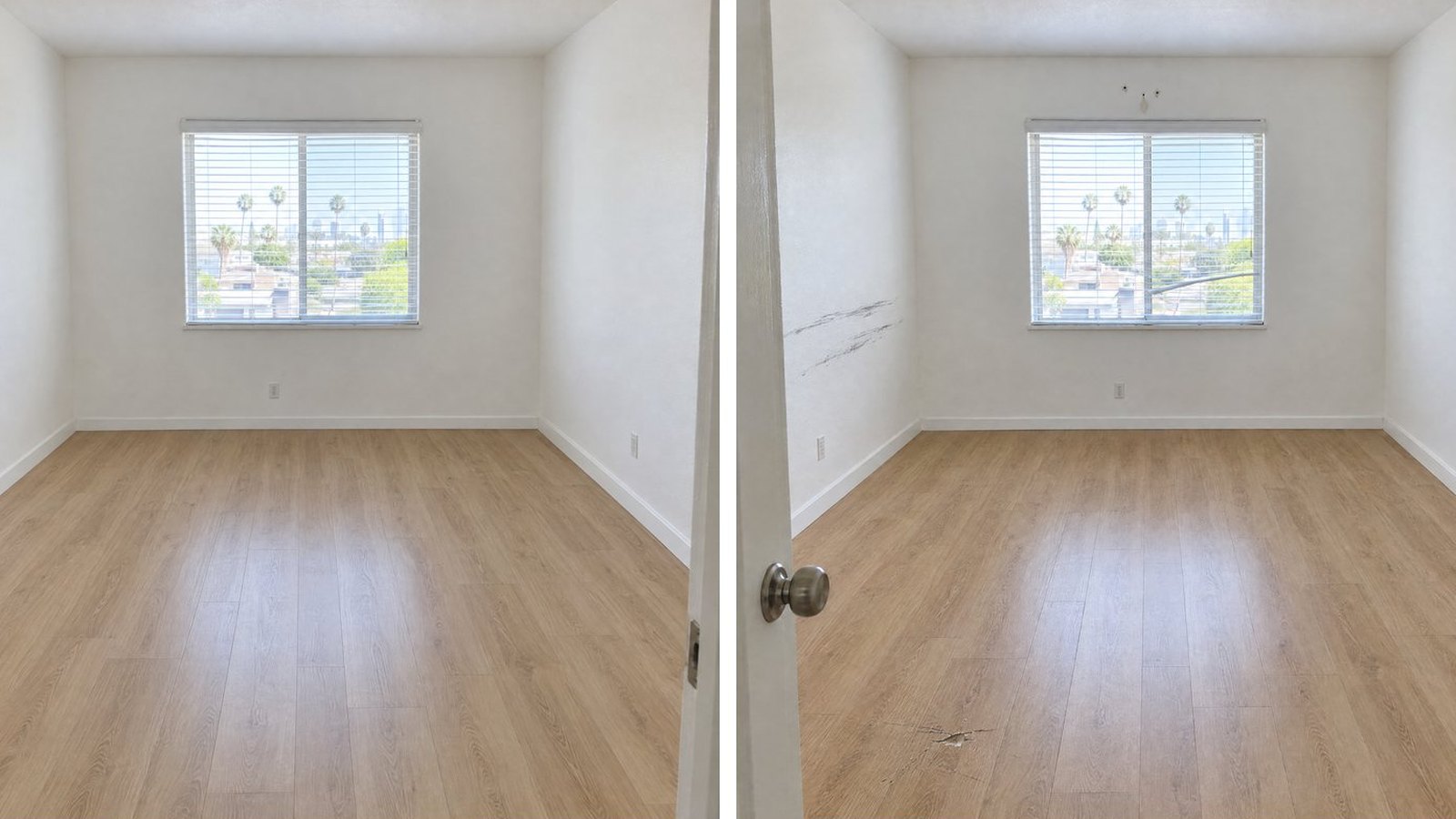
What the law asks for
AB 2801 amended California Civil Code section 1950.5, the security deposit law. It asks for photos at three moments: at or just before move-in for new tenancies, and, when you deduct for repairs or cleaning, after the tenant moves out and again after the work is done:
- After the tenant moves out, before any repairs or cleaning, starting April 1, 2025.
- After repairs or cleaning are finished, starting April 1, 2025.
- At or just before move-in, for tenancies that begin on or after July 1, 2025.
When you deduct for repairs or cleaning, the photos go to the tenant with the itemized statement. The deposit itself is still due back within 21 days after the tenant leaves.
Key dates
| When | What applies |
|---|---|
| April 1, 2025 | Photos after move-out, before repairs or cleaning, and photos after repairs or cleaning |
| July 1, 2025 | Photos at or just before move-in, for tenancies that begin on or after this date |
| Before move-out | The tenant may ask for an initial inspection, no earlier than two weeks before the tenancy ends, so they can fix issues first |
| Within 21 days after move-out | The itemized statement, the photos for any deduction, and the rest of the deposit |
Two things have not changed. You can deduct only for damage beyond ordinary wear and tear, and for cleaning needed to return the unit to the level of cleanliness it had at move-in. And a court can award a tenant up to twice the deposit when a landlord keeps it in bad faith, which is a good reason to keep the file complete.
- Tenant leavesMove-out record
Before any cleaning or repairs. Each room photographed, with a dated report (PDF) and the 3D tour.
Visit 1 - Your crew worksRepairs and cleaning
Tell us when the unit is ready.
- Before the next tenantAfter repairs
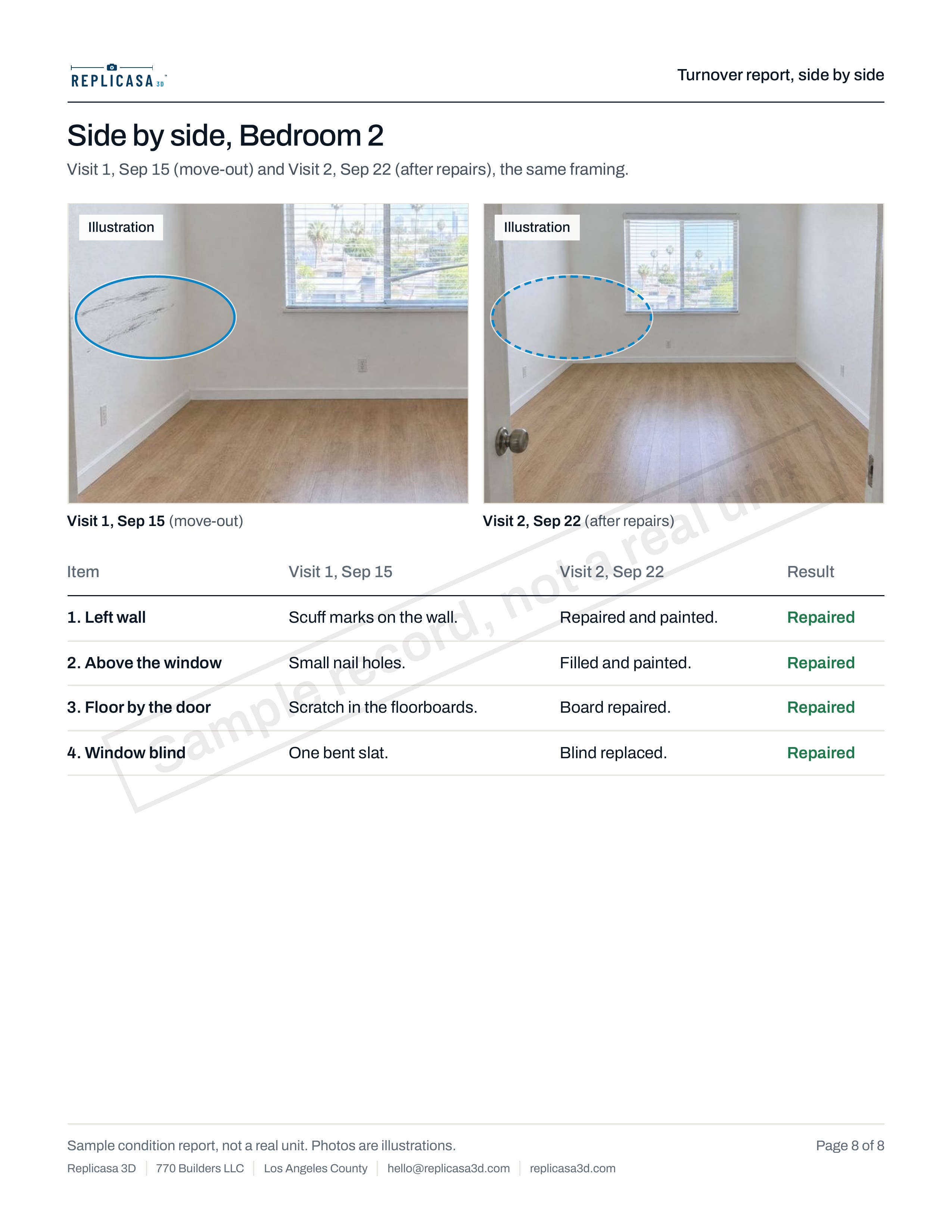
Repairs done. Each room photographed again, same framing, as close to move-in day as you can book.
Visit 2 - At move-inNot in the Turnover PackageMove-in photos
Required for tenancies starting on or after July 1, 2025. Add a move-in Condition Scan to your Turnover Package quote, or book it on its own.
Condition Scan
What counts as a dated photo
The statute asks for photographs at each moment. It does not set a file format or a camera. What makes a photo useful later is that its date can be shown and that nobody has changed it. In practice:
- Keep the original file. A phone or camera writes the date and time into each photo file. Screenshots, edited copies and photos sent through some messaging apps lose that data.
- Check the clock. A camera with the wrong date makes every photo on it look wrong. Check the date on the device before the visit.
- Show the whole room, then the detail. A close-up of a scuff means little unless a wider photo shows which wall it is on.
- Put something in frame for scale. A tape measure or a light switch helps someone judge the size of a hole or a stain.
- Store the set together. Keep each visit’s photos in one folder under the unit and the date, with the itemized statement once you send it.
Whether a particular set of photos is enough in a dispute is a legal question. Check your process with your attorney.
Room-by-room checklist
- Every room from two opposite corners, plus each wall you might charge for.
- Floors and carpet, close up where there is wear or a stain.
- Kitchen: counters, cabinet fronts and inside, appliances inside and out.
- Bathrooms: tub or shower, grout, vanity, toilet, mirror.
- Windows, screens, blinds, doors and door frames.
- Walls: holes, scuffs and paint, with something in frame for scale.
- Closets, the laundry area, and any patio, balcony or storage space that comes with the unit.
- Keep the original files with their date and time, not screenshots or edited copies.
Tenancies that started before July 1, 2025
The move-in photo rule applies to tenancies that begin on or after July 1, 2025. For a tenant who moved in earlier, there may be no move-in photos, and AB 2801 does not ask you to create them now. The move-out and after-repairs photos still apply when that tenant leaves, because those rules took effect on April 1, 2025. If you have older move-in photos, an inspection checklist or a signed condition form from that move-in, keep them in the unit file with the new photos.
Gaps that weaken a deposit file
- Photos taken after cleaning. The move-out set has to show the unit before repairs or cleaning. Book the move-out visit before your crew goes in.
- No after-repairs photos. Without them, the file shows the damage but not the finished work you charged for.
- Photos with no date data. Exported or forwarded copies often lose it. Keep the originals.
- A deduction with no paperwork. The itemized statement should come with the invoices or receipts for the work, or a description of the work, the time and the hourly rate if your own staff did it. Section 1950.5 sets out what is needed.
- A missed deadline. The 21 days run from the day the tenant moves out, not from the day the repairs finish. If repairs cannot be finished in time, the statute allows a good-faith estimate, with the receipts sent later.
Entering an occupied unit
For the move-in photos, the unit is usually empty. For an inspection while a tenant still lives there, California Civil Code section 1954 applies: give the tenant written notice at least 24 hours ahead (6 days if mailed), and enter during normal business hours unless the tenant agrees otherwise. Say in the notice what the visit is for. We send a notice template when you book.
Planning the two visits
The Turnover Package covers two of the three moments: the move-out record and the after-repairs record. The timing is what makes them useful.
- When the tenant gives notice, tell us the move-out date. We book the first visit for after the tenant leaves and before your crew starts.
- While your crew works, nothing is needed from us. Tell us when the unit is ready.
- Before the next tenant. Book Visit 2 as close to move-in day as you can. Whether that set can also be your move-in photos depends on timing; ask your attorney. If the unit will sit empty first, add a separate move-in visit.
What the tenant receives
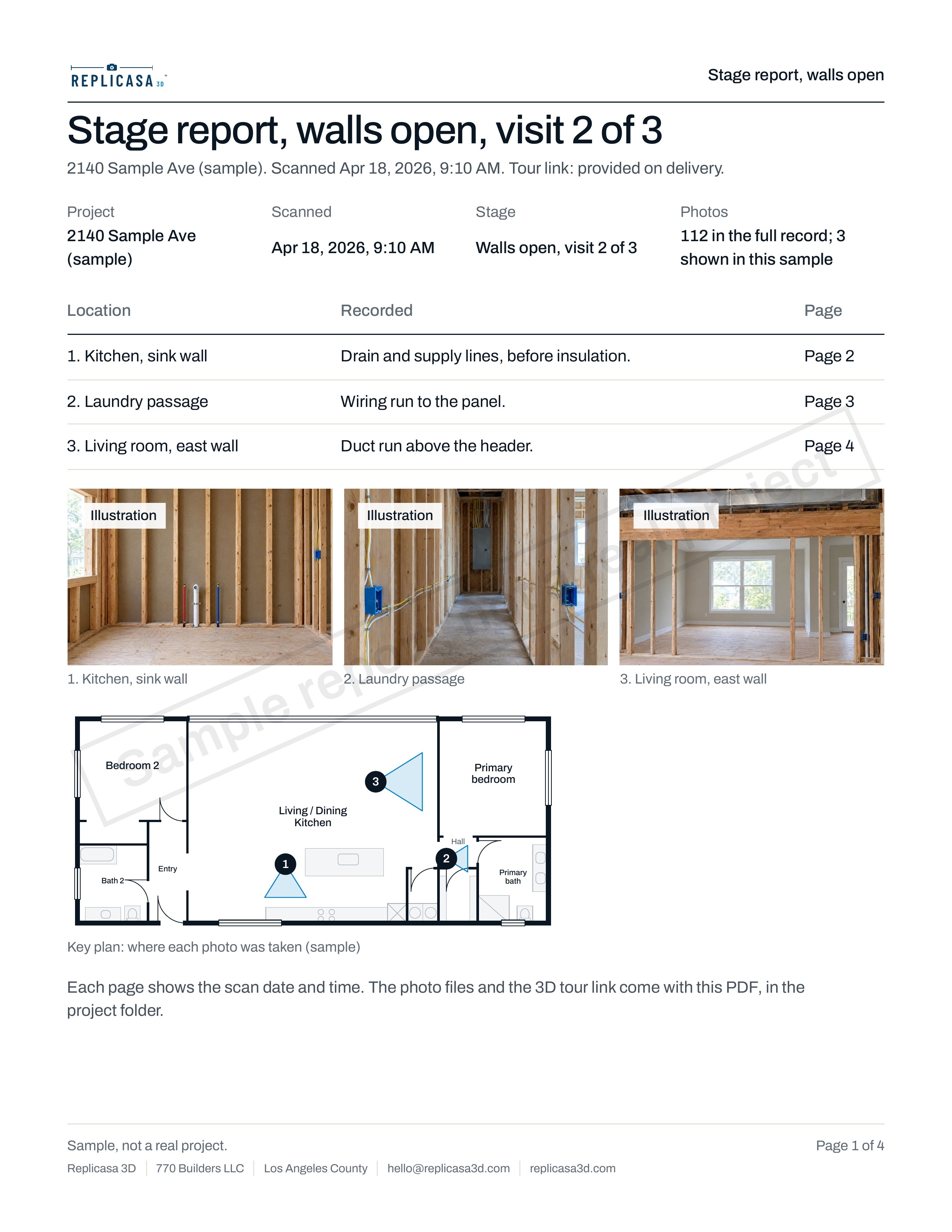
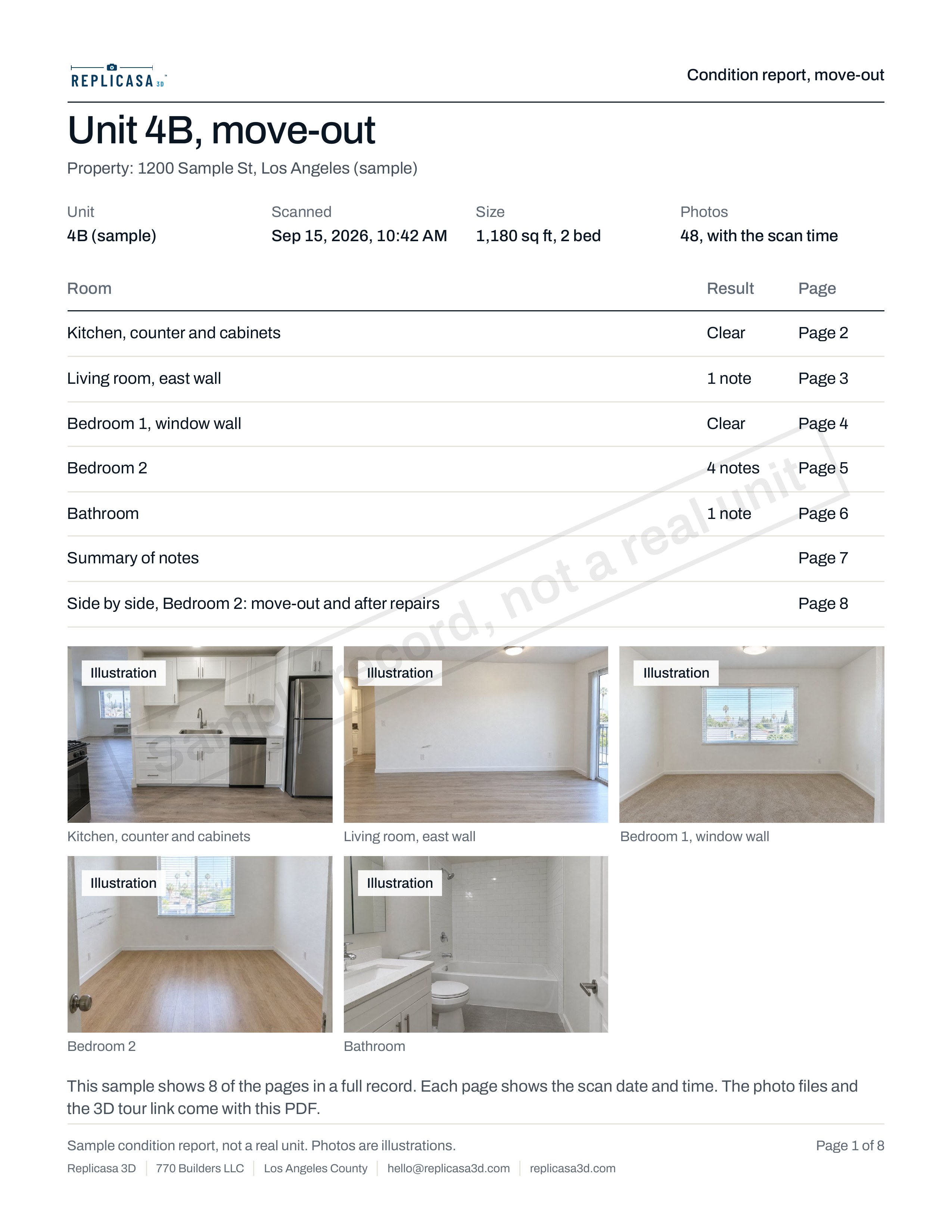
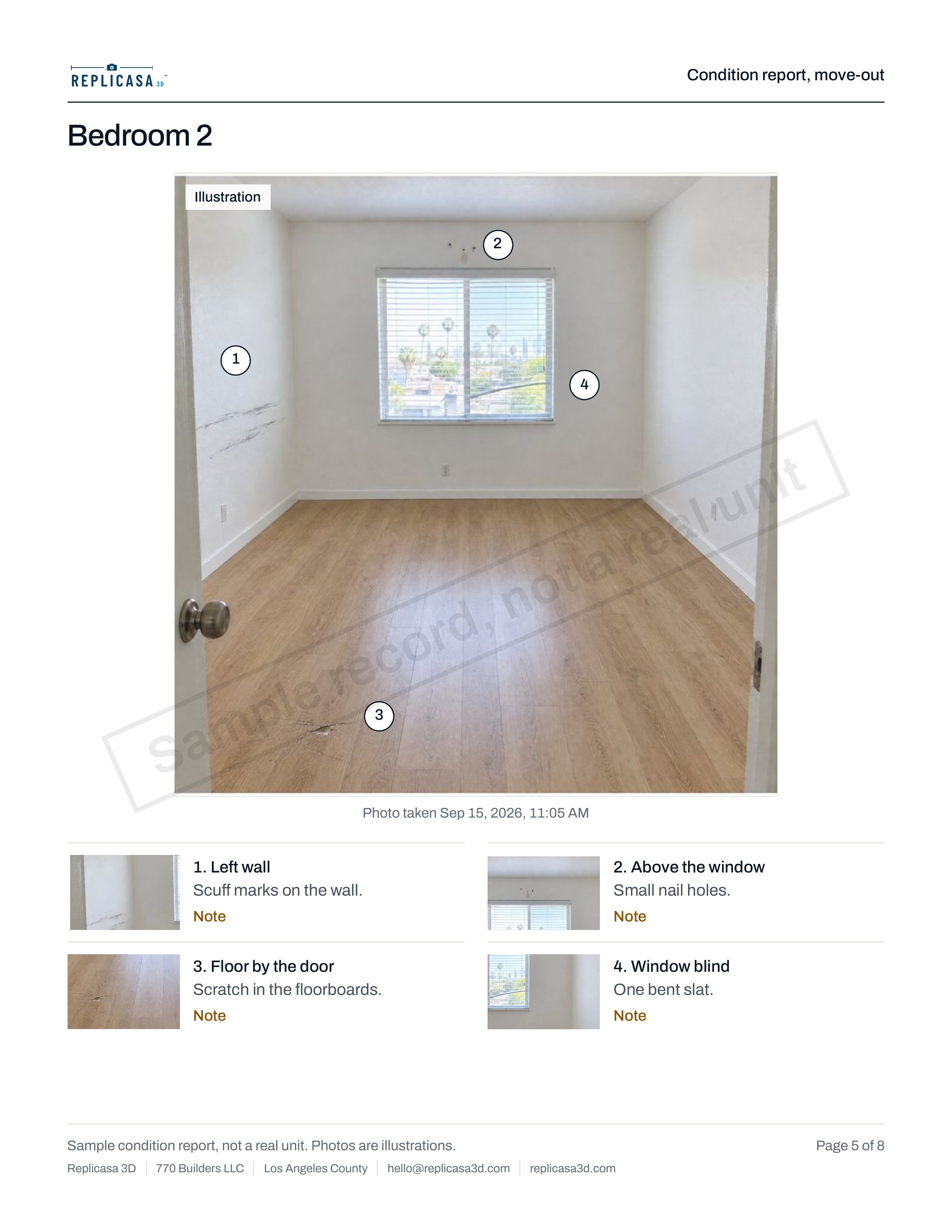
With the itemized statement, the tenant gets the photos for each deduction and the balance of the deposit. A 3D record adds one link they can open on a phone to see the same rooms, and a PDF that lists each note with its photo. Sending the tenant the same record you relied on means you are both looking at the same rooms, on the same dates.
How a 3D record helps
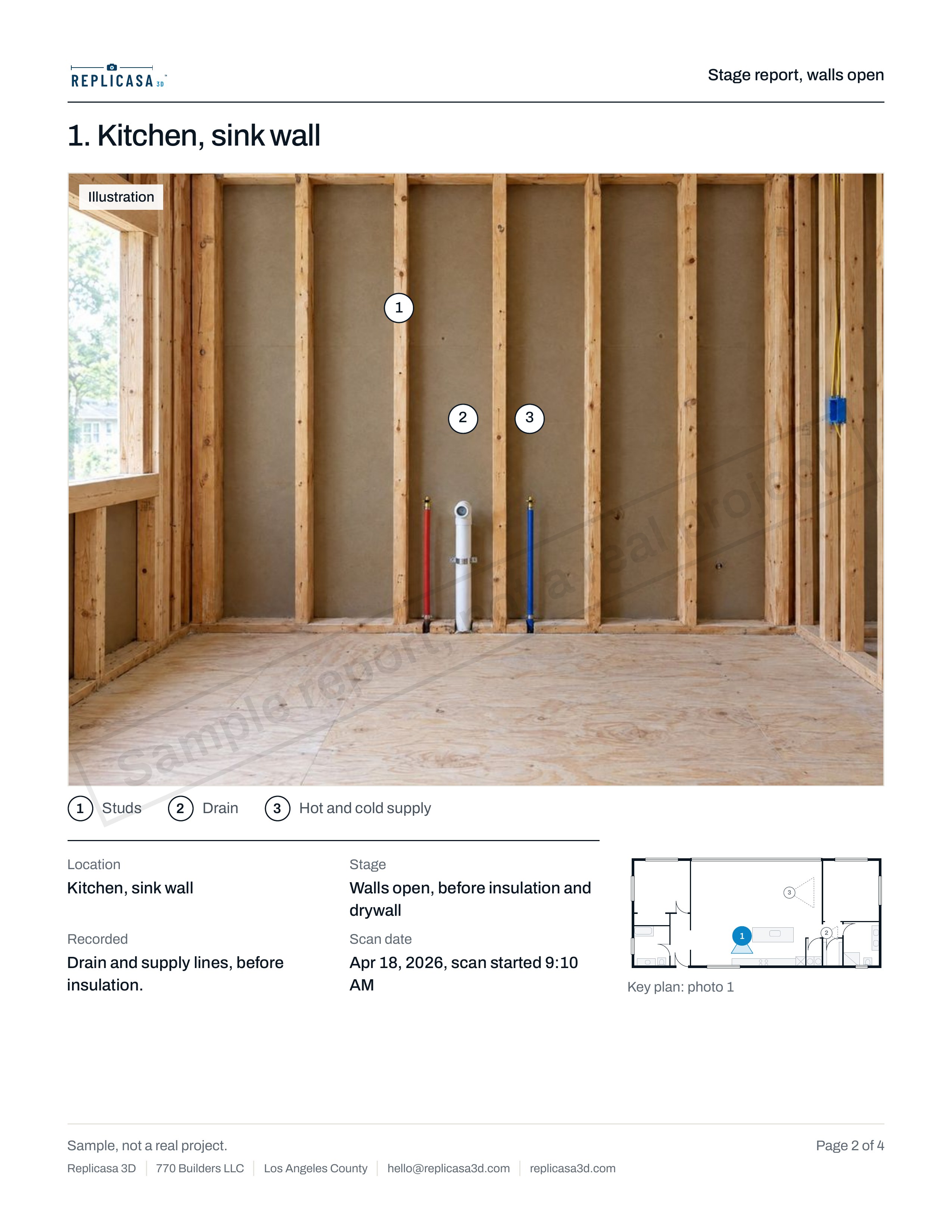
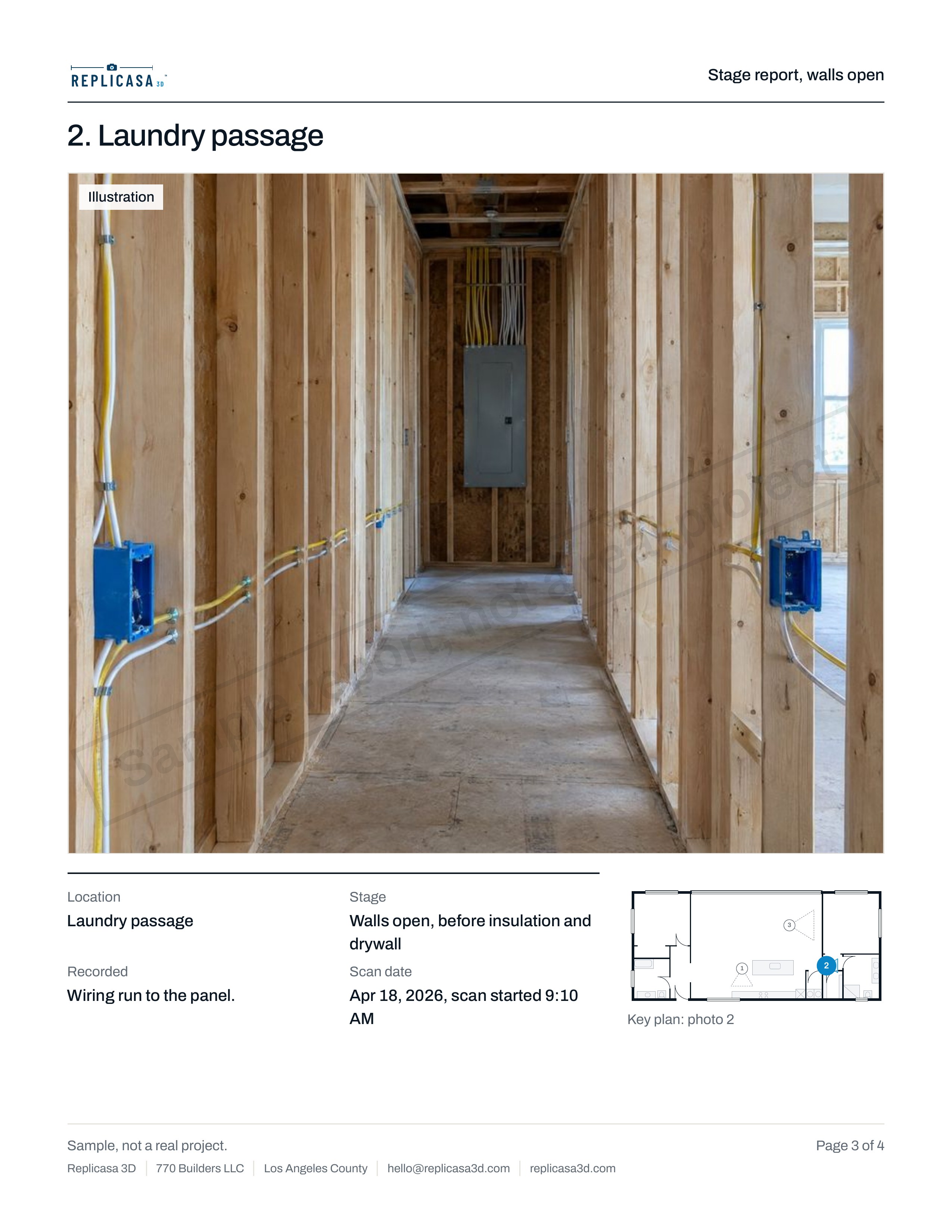
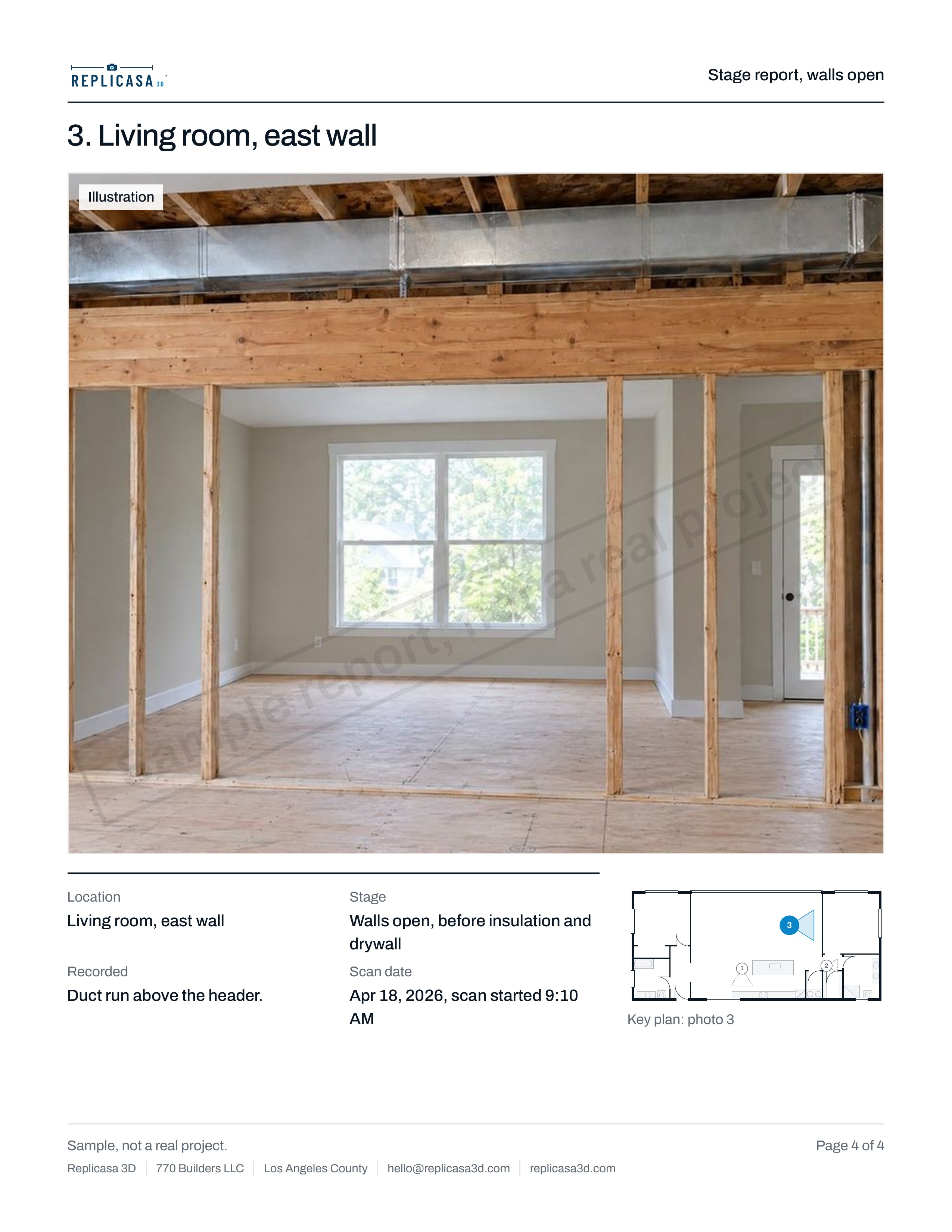
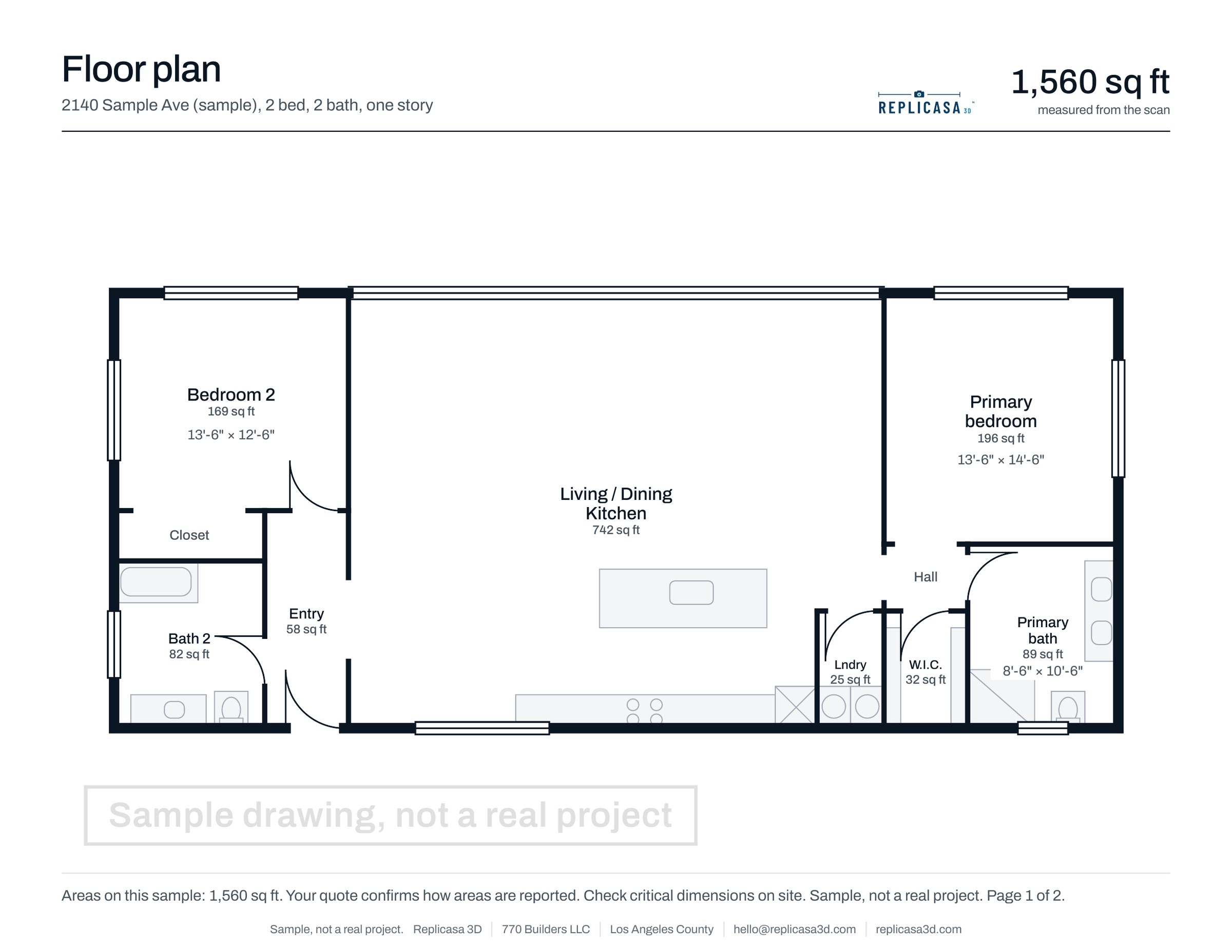
One visit records every room with dated photos, a 3D tour the tenant can open and a PDF to attach to the itemized statement. Each page of the report prints the scan date and time beside the photos, so the date stays with the record even when a file is forwarded or re-saved. The tour shows every room in its place in the unit, so a note like “scuff on the left wall” shows which wall it is, in place. With the Turnover Package, the move-out and after-repairs visits sit side by side in one report, same rooms, same framing.
The record gives you dated, room-by-room photos for each moment. The invoices, the itemized statement and the 21-day deadline stay with you. It does not decide what you can deduct; that is still the law and, where needed, your attorney. For the packages and an estimate, see move-in and move-out reports for property managers.
Sources: Assembly Bill 2801 (2023–2024 session); California Civil Code sections 1950.5 (security deposits) and 1954 (entry), on leginfo.legislature.ca.gov. Checked October 16, 2026. This guide is a plain summary, not legal advice.